
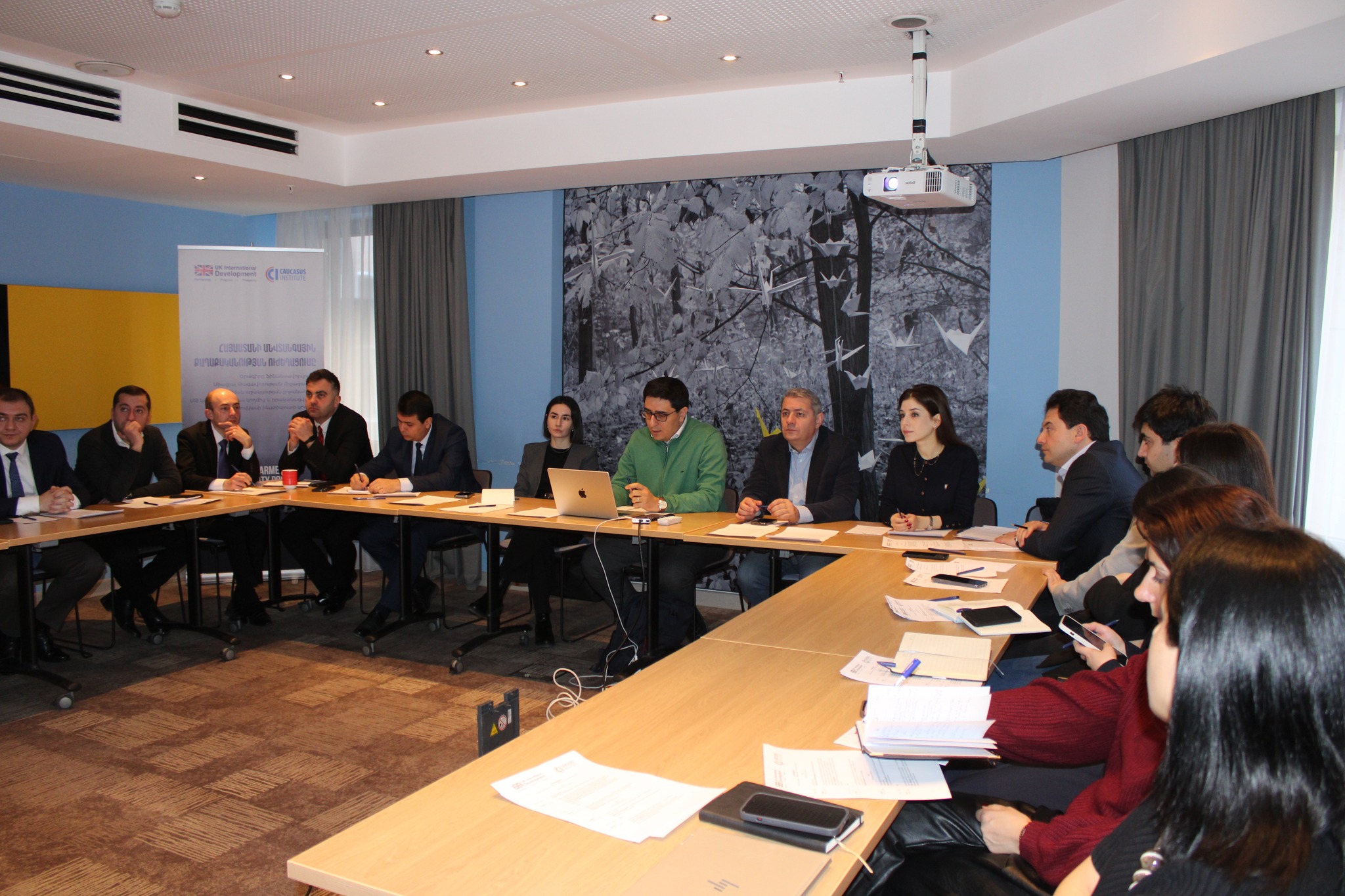
Strengthening Armenia's National Security Policy
From March 3–6, the Caucasus Institute held a four-day training in Yerevan as part of the “Strengthening Armenia’s National Security Policy” project. Lectures covered investment policy, artificial intelligence, regional logistics, hybrid conflicts, and policy brief preparation. Participants included representatives from Armenia’s Security Council, several ministries, and the National Security Service. The project is funded by the Government of the United Kingdom through its international development assistance.
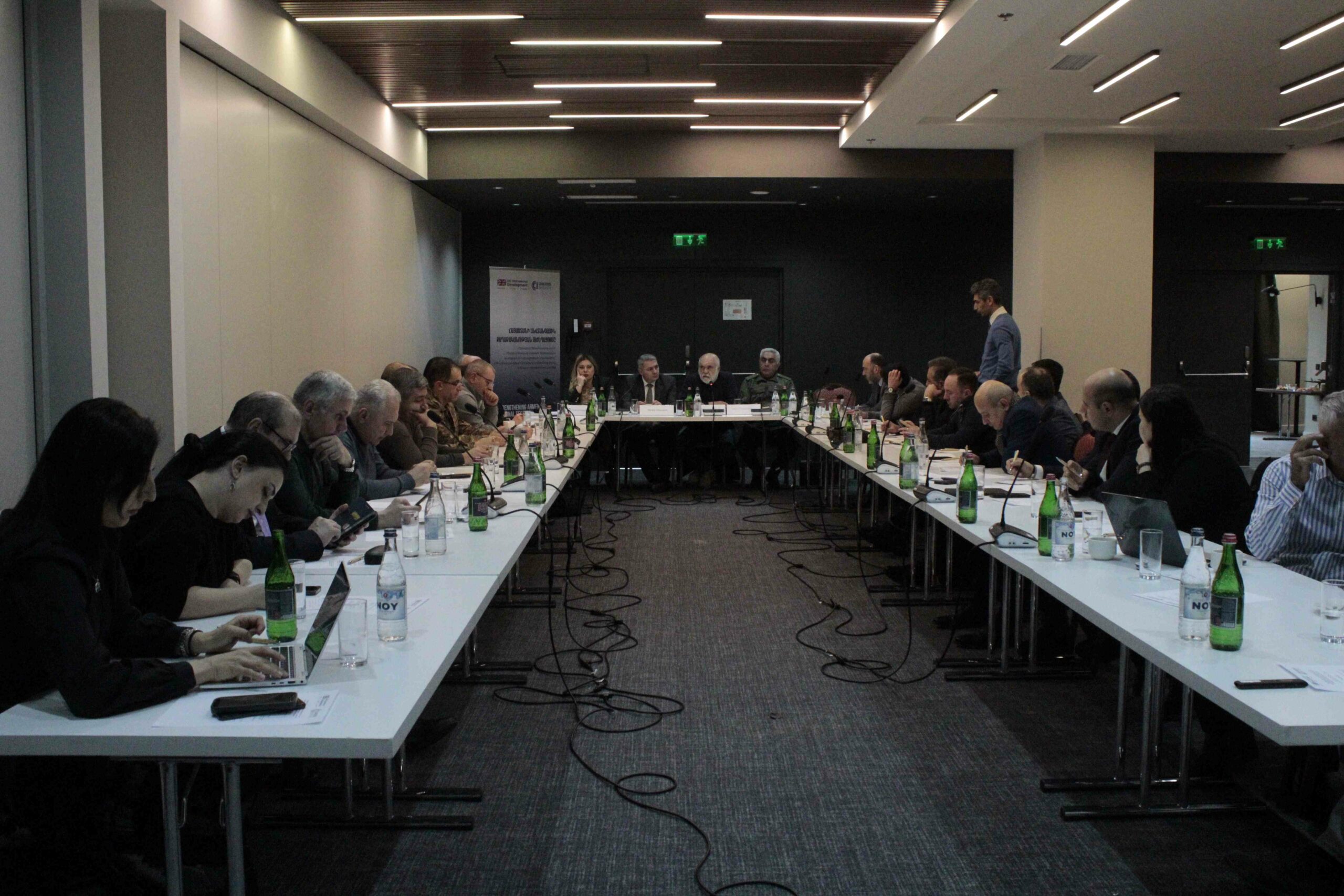
Elections and Domestic Politics: The Internal Dimension of Armenia’s National Security Policy
From February 27 to March 1, the Caucasus Institute held a workshop in Tsaghkadzor on elections, domestic politics, and Armenia’s national security. Representatives of the Security Council, experts, academics, and journalists discussed how electoral processes affect stability and security. Participants examined risks of external involvement, the influence of public opinion surveys, the state of political parties, and possible post-election scenarios and their implications for the country’s political landscape.
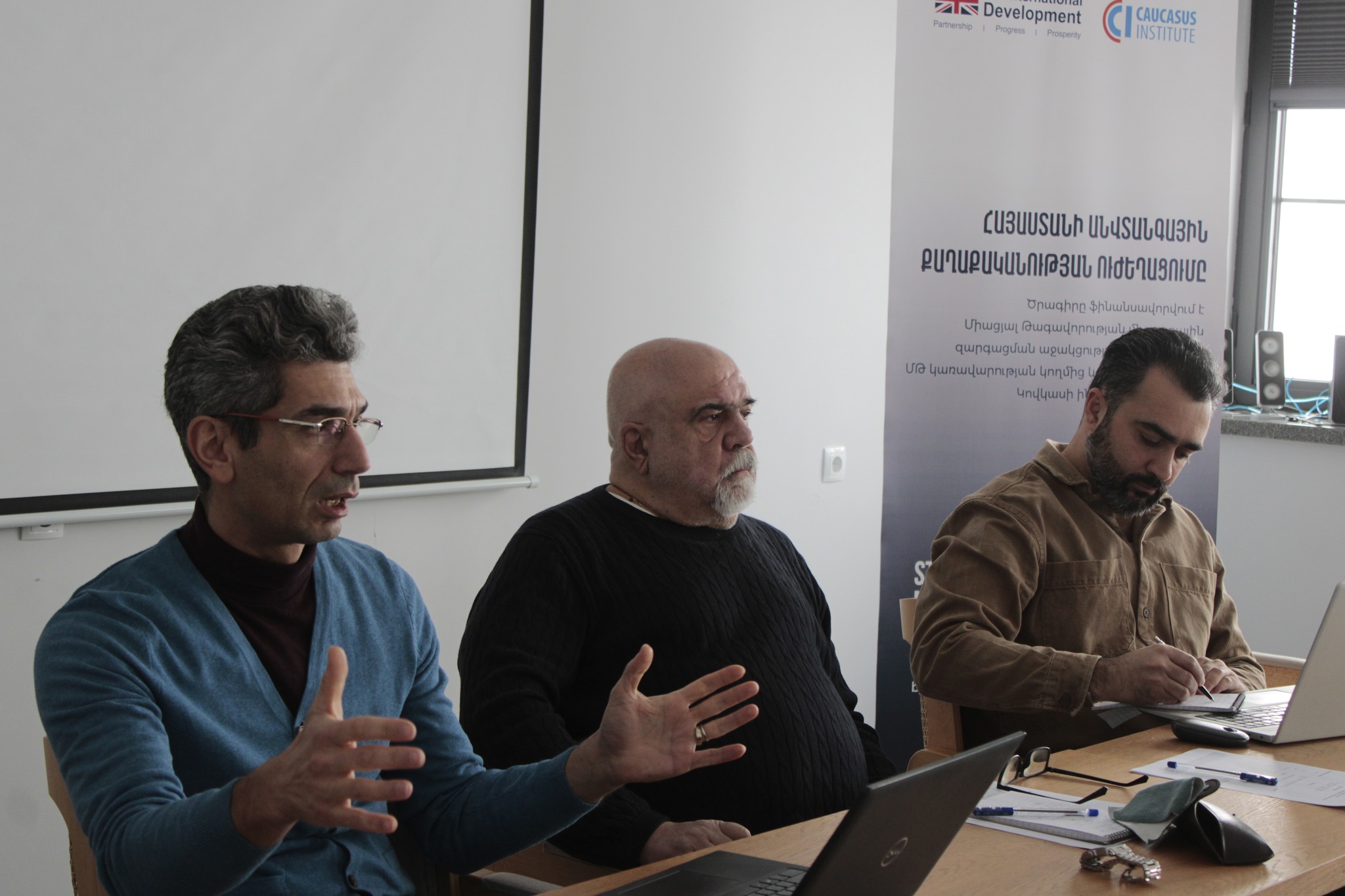
Chatham House Discussion
On February 24, the Caucasus Institute held a closed expert discussion in Yerevan titled “Regional and Global Processes: New Threats and Opportunities for Armenia’s Foreign and Security Policy.” Gohar Iskandaryan discussed developments in and around Iran and their implications for Armenia’s security. Artsrun Hovhannisyan addressed reforms and challenges within the Armenian Armed Forces. Alexander Iskandaryan analyzed developments around Ukraine and shifting external strategies. The discussion was moderated by Sergey Minasyan. The event brought together representatives of Armenia’s key security institutions and experts. It was held within the “Strengthening Armenia’s National Security Policy” project funded by the UK Government.
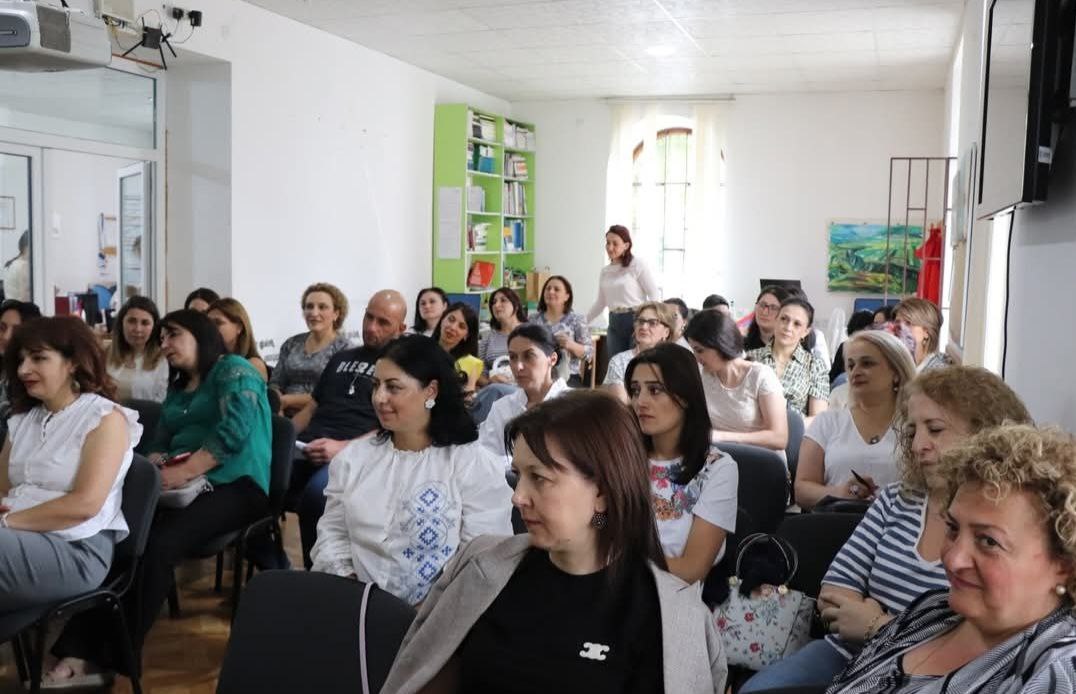
Popular Participation in Legislation in Armenia
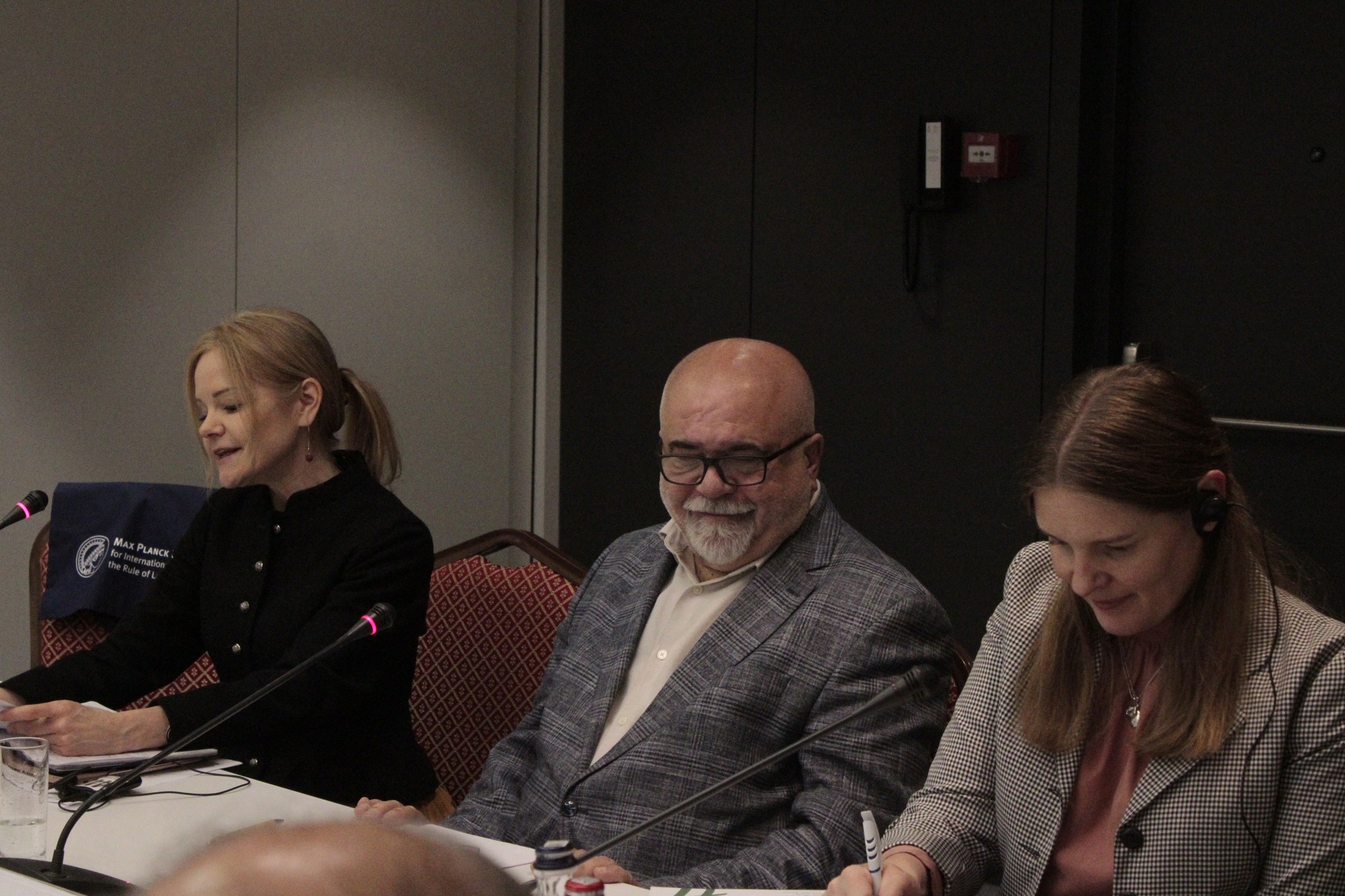
On the 26th of November 2025, the Caucasus Institute, in cooperation with the Max Planck Foundation for International Peace and the Rule of Law, organized the concluding conference of the “Popular Participation in Legislative Processes” program. During the conference, civil society organizations from Lori, Shirak, and Yerevan presented group initiatives developed over a six-month period to representatives of state institutions and the expert community. The initiatives addressed challenges related to education, public participation, and the environmental and urban context.
Discussing Armenia’s 2026 Elections and Regional Stability
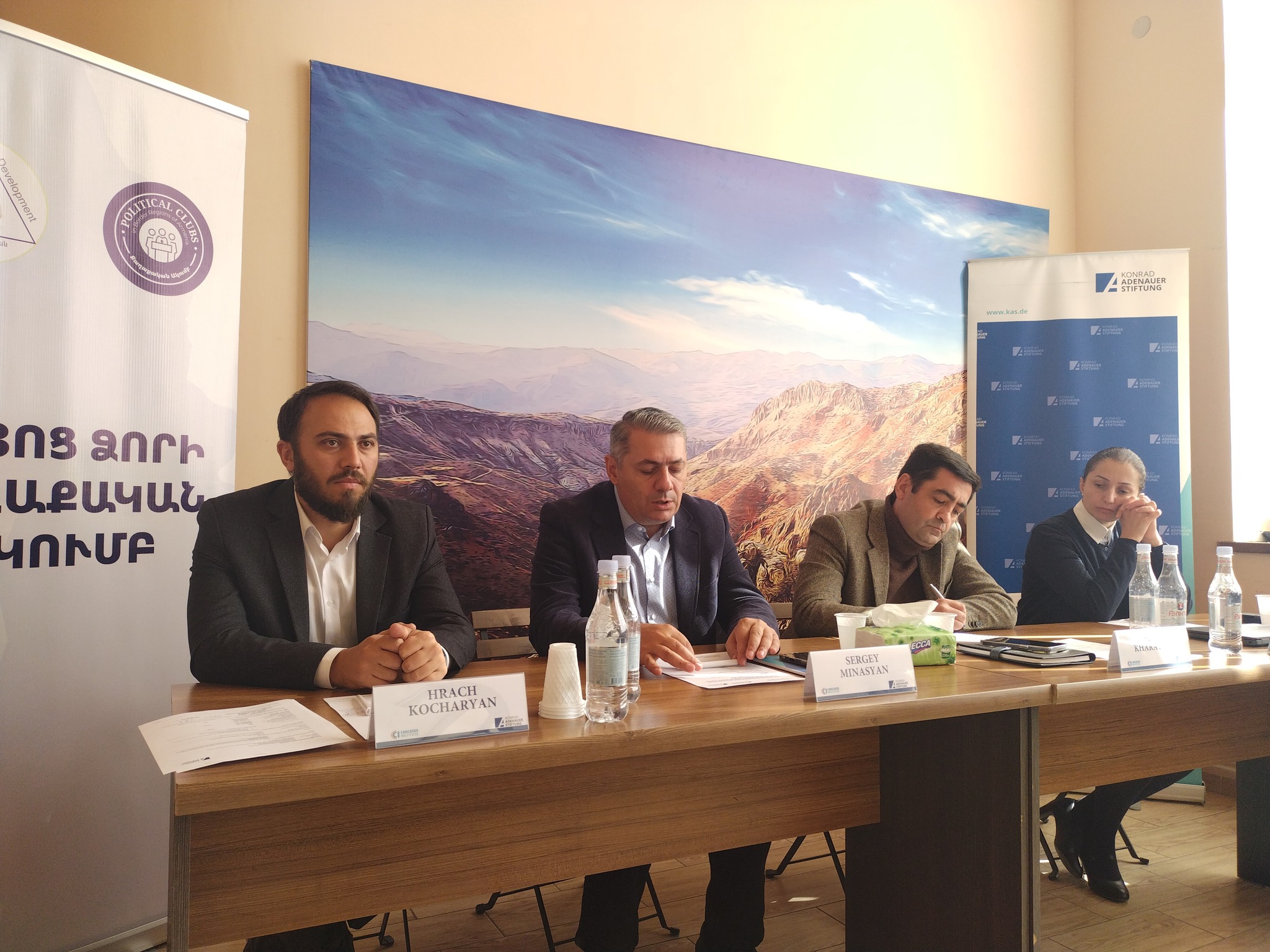
On October 17, 2025 the Vayots Dzor Political Club held a discussion dedicated to the 2026 parliamentary elections. Sergey Minasyan and Arsen Kharatyan analyzed the impact of the Washington agreements on security and stability in the South Caucasus, particularly in the context of the upcoming elections. The event was organized by the Caucasus Institute in cooperation with the Konrad Adenauer Foundation.
Publications
Refugee Integration Reframed: Adapting Existing Framework to the Unique Experience of Nagorno-Karabakh Refugees in Armenia
Author: Lydia D. Smith, Master's Student of European & Russian Studies at Yale University

Refugee Integration Reframed: Adapting Existing Framework to the Unique Experience of Nagorno-Karabakh Refugees in Armenia

The Armenian Diaspora in France: Political Power in the Context of the Nagorno Karabakh Conflict
Author: Thomas Vignes, MA in "Comparative Politics of Eurasia", Higher School of Economics in Saint-Petersburg
The Armenian Diaspora in France: Political Power in the Context of the Nagorno Karabakh Conflict

The Difficulties of Social and Labour Integration of People from Nagorno Karabakh: A Parallelism with the Greek Case of Pontic Greeks and Ethnic Greek Albanian Migrants Merged into Greece
Author: Carlo Busini, Master in Global Economics and Social Affairs, Ca'Foscari Challenge School
The Difficulties of Social and Labour Integration of People from Nagorno Karabakh: A Parallelism with the Greek Case of Pontic Greeks and Ethnic Greek Albanian Migrants Merged into Greece
Projects
The Caucasus Institute designs and implements projects focused on policy research, analytical work, capacity building, and expert dialogue in the South Caucasus. The Institute’s projects address key issues related to regional security, governance, peacebuilding, and cooperation. Projects are implemented in partnership with international organizations, public institutions, research centers, and civil society organizations, and contribute to evidence-based policymaking and informed public discourse.
Events
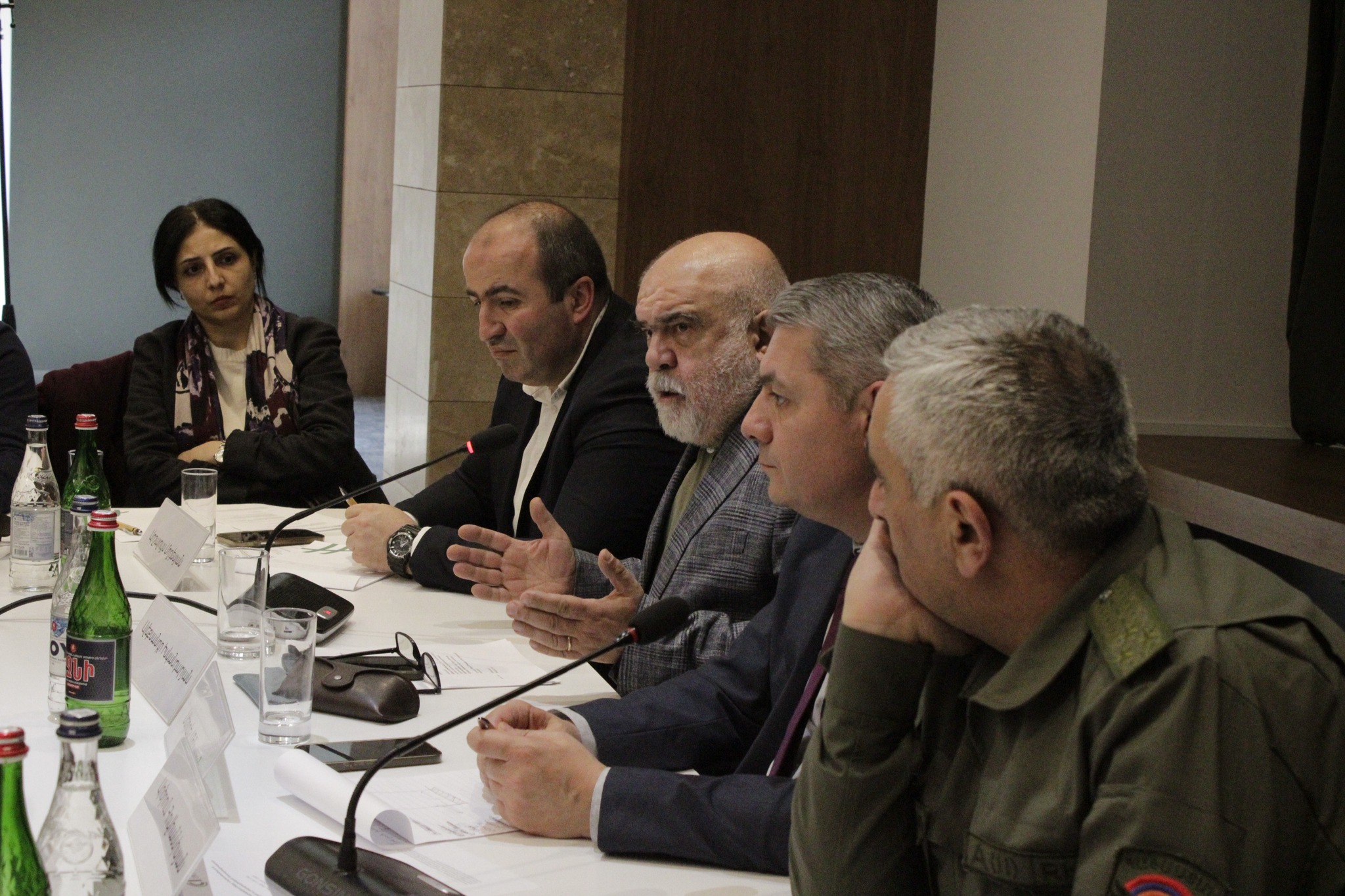
Public Discussion
SECURITY SECTOR REFORMS IN ARMENIA AND THE ENGAGEMENT OF THE EXPERT COMMUNITY AND CIVIL SOCIETY
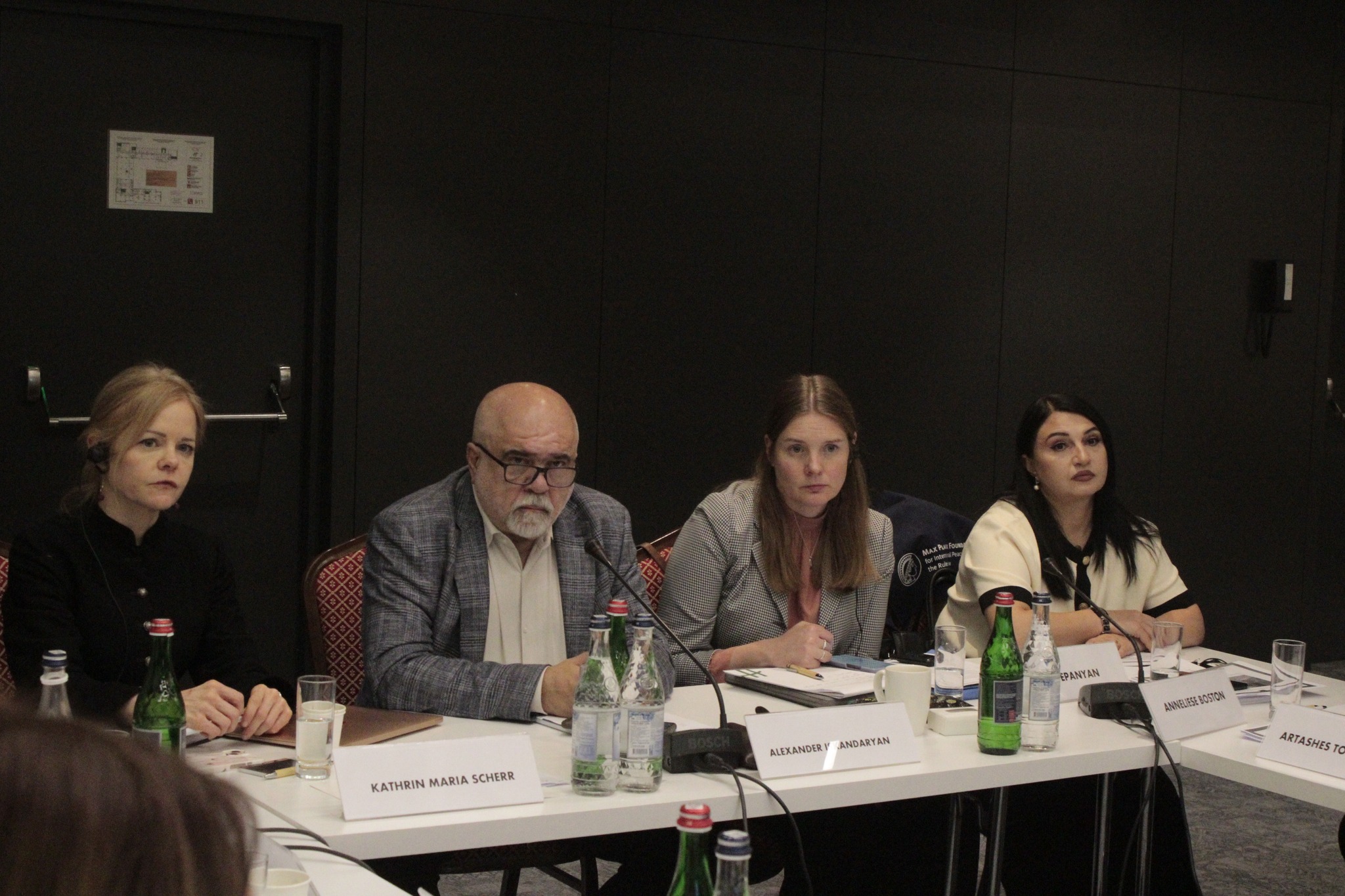
On March 10, 2026, the Caucasus Institute organized a public discussion on the topic “Security Sector Reforms in Armenia and the Engagement of the Expert Community and Civil Society.”Following the opening remarks by the Director of the Caucasus Institute, Alexander Iskandaryan, speeches were delivered by Artsrun Hovhannisyan, Head of the Command and Staff Institute of the Vazgen Sargsyan Military Academy, Arsen Kharatyan, founder of Aliq Media, and journalist and TV host Arshaluys Mgdesyan. The speeches were followed by an open discussion moderated by Sergey Minasyan, Deputy Director of the Caucasus Institute. During the discussion, participants addressed the status of security sector reforms in Armenia in the context of existing geopolitical threats, and their potential future trajectory, current involvement of the expert community and civil society in security reforms, incentives and obstacles to expert and CSO involvement in security reforms. Participants also discussed the possible formats in which state institutions can cooperate with CSO, experts and analytical media, emphasizing the importance of developing an inclusive national security agenda. Representatives of civil society presented several proposals regarding the implementation of security sector reforms. The project is funded by the Government of the United Kingdom as part of its international development assistance.